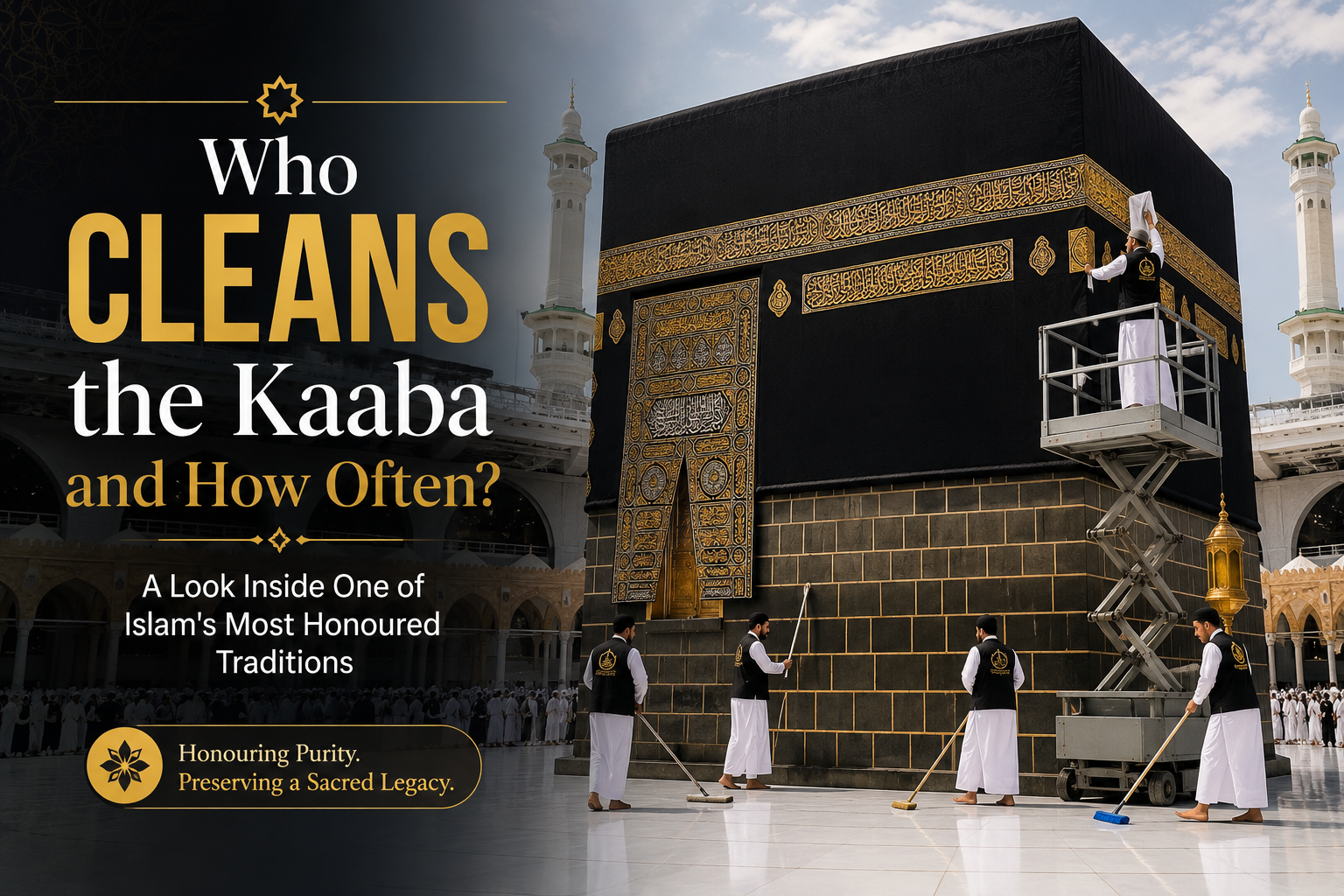
Who Cleans the Kaaba is one of the most frequently asked questions among Muslims and visitors who wish to learn more about the traditions of Islam’s holiest site. Every sacred place has traditions that have been preserved for generations, and the Holy Kaaba is no exception. While millions of Muslims see the Kaaba during Hajj and Umrah, only a very small number of people ever witness what happens inside it. Among the most respected events connected with the Sacred House is its private cleansing ceremony, a practice that symbolises honour, purity, and devotion rather than public celebration.
People across the world often search who cleans the Kaaba, wonder how often is the Kaaba cleaned, or ask who holds the key to the Kaaba. These questions reflect a natural curiosity about one of Islam’s most revered buildings. Understanding the ceremony helps us appreciate not only the physical care of the Kaaba but also the deep respect Muslims have shown it for centuries.
A Tradition Rooted in Respect
The Kaaba is far more than an architectural structure. It is the focal point of Islamic prayer and the destination of millions of pilgrims every year. Because of its immense religious importance, every aspect of its maintenance is carried out with exceptional care.
Cleaning the Kaaba is not performed as a routine maintenance task alone. It is a symbolic act expressing reverence for the House of Allah and preserving a tradition passed through generations.
Who Cleans the Kaaba?
When discussing who cleans the Kaaba, it is important to understand that participation is extremely limited.
The interior is cleaned under the supervision of the Saudi authorities responsible for the care of the Two Holy Mosques. The ceremony is attended by selected officials, religious scholars, members of the Kaaba’s custodial family, and invited guests.
Everyone who takes part understands that it is an honour rather than a privilege. The atmosphere remains quiet, respectful, and centred on worship instead of ceremony.
How Often Is the Kaaba Cleaned?
Many people ask how often is the Kaaba cleaned because they assume such an important building must be maintained regularly. Understanding who cleans the Kaaba also helps explain why this sacred cleaning ceremony is performed with such care and dignity.
Traditionally, the interior is washed twice each year. One cleaning generally takes place before Ramadan and another before the Hajj season, although official scheduling may vary.
During the process, the marble floor and walls are carefully cleaned before the interior is perfumed using high-quality fragrances such as oud and rose essence. The objective is not luxury but cleanliness and respect.
What Happens During the Kaaba Cleaning Ceremony?
The Kaaba cleaning ceremony is conducted privately after the sacred door is opened.
Those invited inside gently clean the interior using cloths and scented water before applying fine perfumes to the walls and floor. Supplications are offered throughout the ceremony, creating an atmosphere of gratitude and devotion.
Unlike public religious gatherings, this event receives very limited attendance, helping preserve its dignity and spiritual significance.
Who Holds the Key to the Kaaba?
For centuries, Muslims have also asked who holds the key to the Kaaba.
The responsibility belongs to the Banu Shaybah family, whose custodianship has continued through many generations. Their role is part of a long-standing Islamic tradition connected with safeguarding the Sacred House.
Although many people ask who cleans the Kaaba, the ceremony is conducted under official supervision while the historic custodianship of the key remains with the Banu Shaybah family.
Why the Ceremony Matters
Cleaning the Kaaba is not simply about preserving a historic structure. It reflects important Islamic values, including purity, humility, gratitude, and service.
The ceremony reminds Muslims that caring for sacred places is itself an act of worship. Every stage of the process is carried out respectfully, without unnecessary display or publicity.
Its simplicity reflects the spiritual message of Islam, where devotion always takes precedence over appearance.
The Lasting Legacy of the Kaaba
The Kaaba has witnessed countless generations of believers. Throughout history it has remained the centre of Islamic worship despite changes in architecture, technology, and society.
Its annual traditions, including replacing the Kiswah and cleaning the interior, help preserve a living connection with Islamic heritage.
Although most Muslims will never enter the Kaaba, learning about these traditions strengthens appreciation for the reverence surrounding the House of Allah.
Authentic Islamic Artifacts Inspired by the Kaaba
For many believers, the beauty of the Kaaba inspires a desire to keep a meaningful reminder of this sacred place within their homes.
Carefully crafted authentic Islamic artifacts, including framed Kiswah displays, Arabic calligraphy, and heritage-inspired Islamic décor, allow families to celebrate Islamic history while creating spiritually uplifting spaces.
These pieces are valued not only for their artistic beauty but also for the powerful reminder they provide of faith, devotion, and the unity of the Muslim Ummah.
Conclusion
Learning who cleans the Kaaba, understanding how often is the Kaaba cleaned, discovering who holds the key to the Kaaba, and appreciating the significance of the Kaaba cleaning ceremony reveal a tradition built upon humility and honour.
For Muslims around the world, these practices are a reminder that the Sacred House is preserved with profound care and respect. Its traditions continue to inspire believers across generations, while authentic Islamic artifacts inspired by the Kaaba help keep that spiritual connection alive in homes throughout the world.