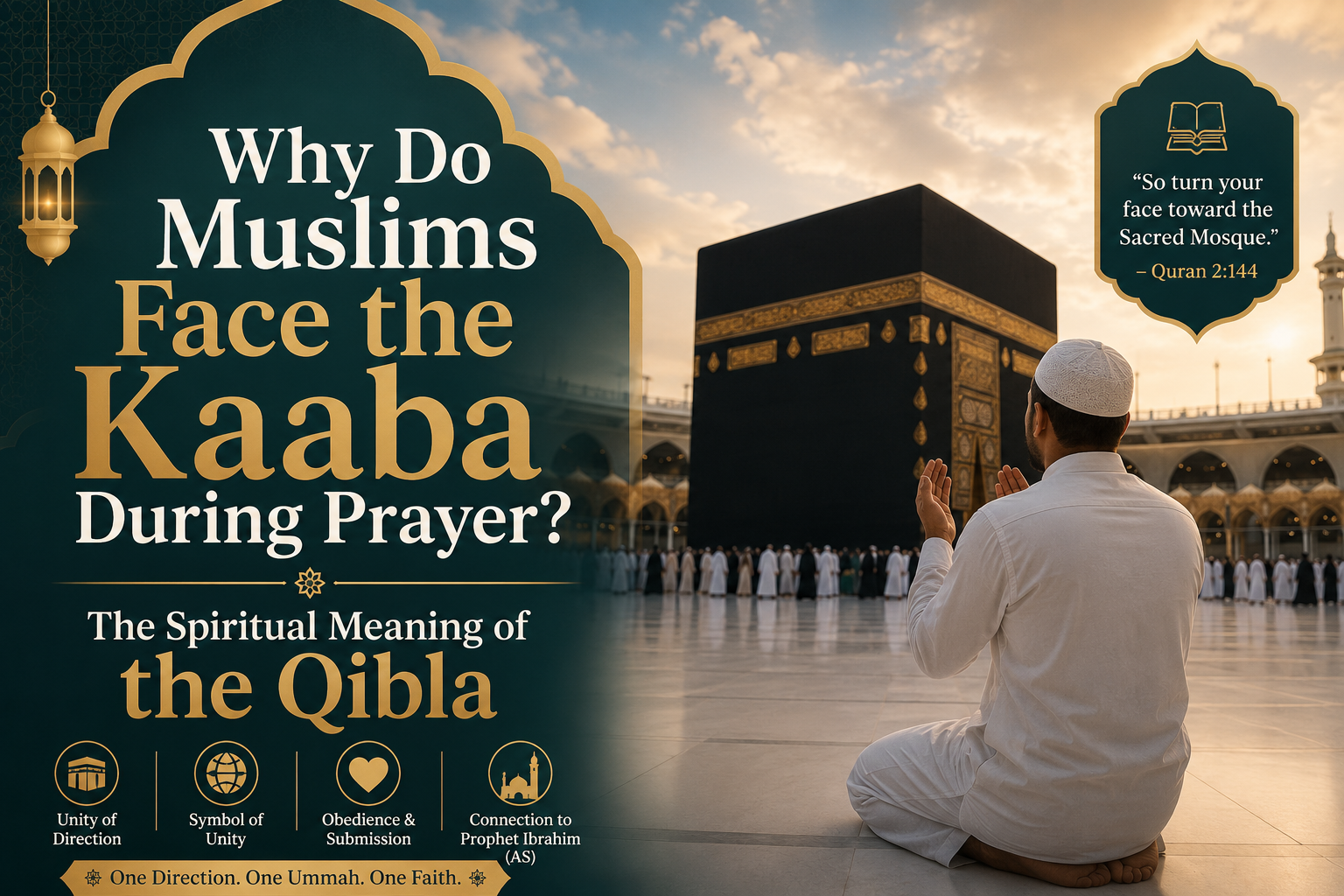
Why Do Muslims Face the Kaaba During Prayer? This is one of the most common questions asked by both Muslims and non-Muslims seeking to understand Islamic worship. For Muslims around the world, prayer is more than a daily act of worship—it is a direct connection with Allah. One of the most recognisable features of Islamic prayer is that Muslims, regardless of where they live, face the Holy Kaaba in Makkah. This direction is known as the Qibla, and it unites millions of believers in a single act of devotion every day.
Many people unfamiliar with Islam wonder why Muslims pray towards the Kaaba. Do they worship the building itself? What is the spiritual meaning behind this practice? Understanding the Qibla helps explain one of Islam’s most powerful symbols of unity, obedience, and faith.
What Is the Qibla?
The Qibla is the direction that Muslims face while performing their five daily prayers (Salah). This direction points towards the Holy Kaaba, located inside Masjid al-Haram in the sacred city of Makkah, Saudi Arabia.
No matter where Muslims live—whether in the United Kingdom, Canada, Australia, South Africa, or Indonesia—they orient themselves toward the same sacred point before beginning prayer.
Today, finding the Qibla is simple through mosque indicators, compasses, and smartphone applications, but the spiritual significance remains exactly the same as it has for over fourteen centuries.
What Is the Holy Kaaba?
The Kaaba is a cube-shaped structure covered with the famous black Kiswah, embroidered with verses from the Holy Quran in gold and silver thread. It stands at the centre of Masjid al-Haram and is considered the holiest site in Islam.
According to Islamic tradition, the Kaaba was originally built by Prophet Ibrahim (Abraham, peace be upon him) and his son Prophet Ismail (Ishmael, peace be upon him) as a house dedicated solely to the worship of Allah.
For Muslims, the Kaaba represents the unity of monotheism and submission to the Creator.
Do Muslims Worship the Kaaba?
One of the biggest misconceptions about Islam is that Muslims worship the Kaaba.
The answer is no.
Muslims worship Allah alone. The Kaaba is not an object of worship; it serves as a common direction for prayer. Facing one direction creates order, unity, and discipline among Muslims worldwide.
Think of it as people standing together in formation. The direction provides organisation, not the object of worship itself.
The Quran clearly teaches that worship belongs only to Allah.
Why Was the Qibla Changed?
During the early years of Islam, Muslims prayed facing Jerusalem.
Later, Allah instructed Prophet Muhammad ﷺ to face the Kaaba instead. This change is mentioned in the Holy Quran and marked an important moment in Islamic history.
The new Qibla reinforced the connection with Prophet Ibrahim and restored the Kaaba as the central place of worship established for the worship of one God.
This change also strengthened the unique identity of the Muslim community while maintaining continuity with earlier prophets.
The Spiritual Meaning of Facing the Kaaba
Facing the Kaaba is filled with deep spiritual symbolism.
A Symbol of Unity
Every Muslim, regardless of nationality, language, race, or social background, turns toward the same point during prayer.
Whether someone is praying alone at home or among millions during Hajj, everyone stands united before Allah.
This remarkable unity demonstrates that Islam brings believers together under one Creator.
A Reminder of Equality
When Muslims stand in prayer, differences disappear.
Rich and poor.
Leaders and workers.
Young and old.
Everyone faces the same direction and stands shoulder to shoulder, reminding believers that all human beings are equal before Allah.
An Act of Obedience
The importance of the Qibla is not in the physical structure itself but in obeying Allah’s command.
Facing the Kaaba demonstrates willingness to follow divine guidance even when the wisdom extends beyond human understanding.
Obedience is a central part of faith in Islam.
A Connection with Islamic History
Every prayer reminds Muslims of the legacy of Prophet Ibrahim, Prophet Ismail, and Prophet Muhammad ﷺ.
The Kaaba has witnessed centuries of worship, supplication, and pilgrimage.
Facing it creates a spiritual link with generations of believers who came before.
The Role of the Kaaba During Hajj and Umrah
The Kaaba becomes the centre of worship during both Hajj and Umrah.
Pilgrims perform Tawaf, walking around the Kaaba seven times while remembering Allah.
Despite circling the Kaaba, Muslims continue to worship only Allah. The Kaaba remains a sacred symbol rather than an object of worship.
Every year, millions gather around it, creating one of the largest peaceful religious gatherings in the world.
The Beautiful Kiswah Covering the Kaaba
One of the most iconic features of the Kaaba is its magnificent black covering known as the Kiswah.
Made from premium silk and embroidered with Quranic verses using gold and silver-plated threads, the Kiswah represents exceptional Islamic craftsmanship and devotion.
It is replaced annually before the Hajj season, continuing a centuries-old tradition that reflects honour and reverence for the sacred House of Allah.
For many Muslims, authentic Kiswah pieces preserved after replacement hold historical, artistic, and spiritual significance as cherished Islamic keepsakes.
How Muslims Find the Qibla Today
Modern technology has made locating the Qibla easier than ever.
Muslims commonly use:
- Smartphone Qibla apps
- Mosque prayer indicators
- Digital Islamic prayer clocks
- Traditional Qibla compasses
- Online Qibla direction tools
These tools help ensure prayers are performed while facing the correct direction wherever believers may be.
Common Questions About the Qibla
Can Muslims pray if they do not know the exact Qibla?
Yes. Muslims should make their best effort to determine the correct direction. If they sincerely attempt to find it, their prayer remains valid even if they later discover a slight error.
Why don’t Muslims simply pray in any direction?
Islam encourages unity in worship. Having one common direction strengthens discipline and creates a visible bond among Muslims worldwide.
Is the Kaaba the first mosque?
The Kaaba is regarded in Islamic tradition as the first house established for the worship of Allah, making it the spiritual centre of Islamic worship.
Preserving the Legacy of the Kaaba
The Kaaba continues to inspire Muslims through its history, symbolism, and timeless message of worshipping Allah alone. Its annual Kiswah replacement reminds believers of the care and reverence shown toward Islam’s holiest site.
For those who appreciate Islamic heritage, authentic Kaaba Kiswah pieces offer a meaningful way to remember this sacred tradition. At Kaaba Kiswa, we are dedicated to sharing the history, craftsmanship, and significance of genuine Kiswah through carefully preserved pieces that honour this remarkable legacy.
Conclusion
Facing the Kaaba during prayer is not about worshipping a building. It is about obeying Allah, strengthening unity among Muslims, and remembering the legacy of the prophets who dedicated their lives to pure monotheism.
The Qibla transforms millions of individual prayers into one unified act of worship, reminding Muslims that despite living across different continents and cultures, they belong to one global community of faith. The Holy Kaaba stands as a timeless symbol of devotion, humility, equality, and submission to Allah—values that remain at the heart of Islam today.