
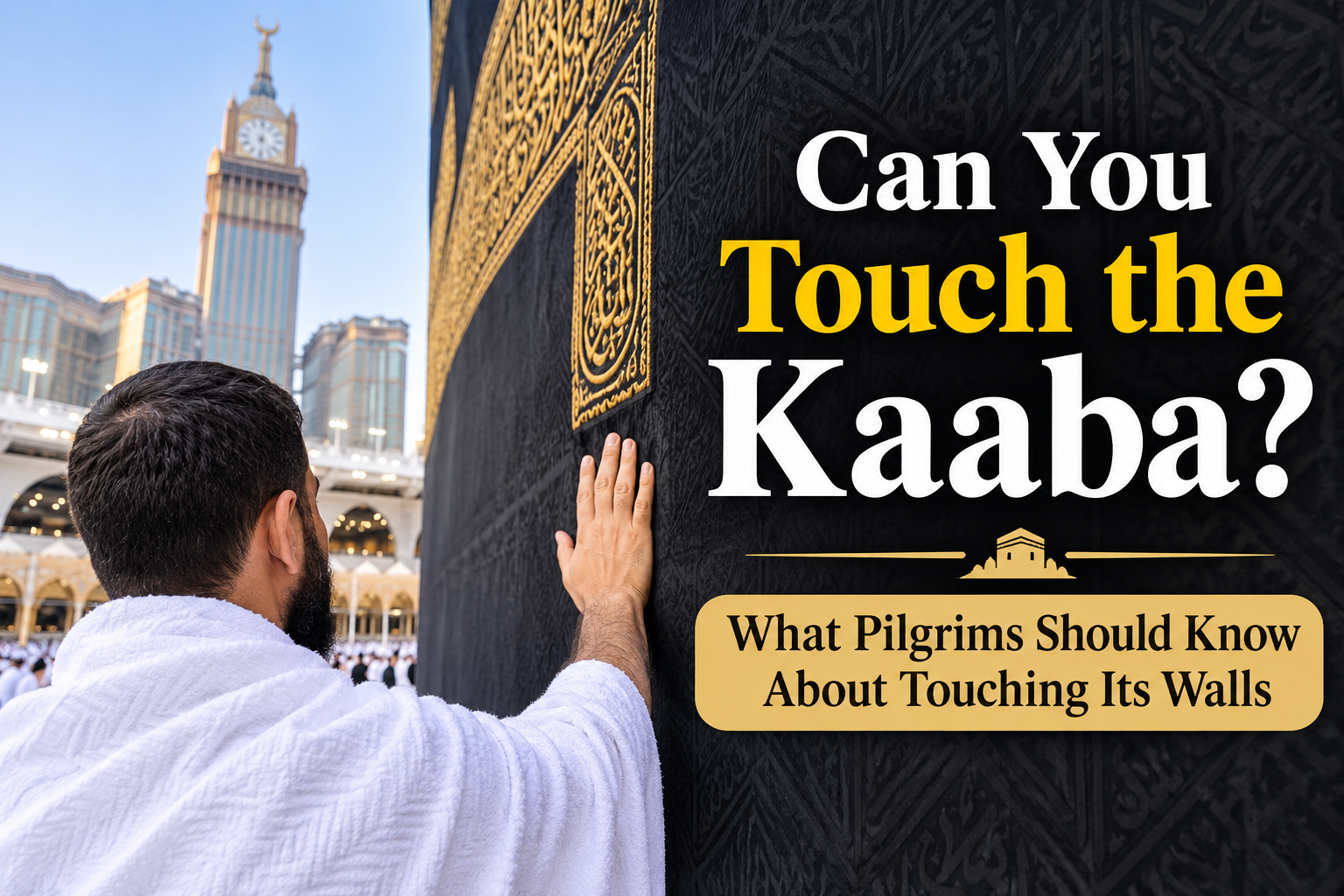
Can You Touch the Kaaba? Standing before the Holy Kaaba in Makkah is an unforgettable moment for every Muslim. During Hajj or Umrah, many pilgrims feel an overwhelming desire to get closer to the Kaaba, touch its walls, or hold its beautiful black covering. But is touching the Kaaba allowed in Islam? Are there specific guidelines pilgrims should follow?
Understanding the religious significance of the Kaaba and its sacred covering, known as the Kaaba Kiswa, can help pilgrims approach this blessed place with respect, knowledge, and devotion.
In this guide, we explain what pilgrims should know about touching the Kaaba, the Islamic guidelines surrounding this practice, and the remarkable story behind its magnificent covering.
Can You Touch the Kaaba During Hajj or Umrah?
Yes, pilgrims can touch the Kaaba when access is permitted and it can be done safely. However, knowing whether you can touch the Kaaba during Hajj or Umrah does not mean touching every wall or rubbing its covering is a religious requirement.
Islamic teachings emphasise worship, sincerity, and following the Sunnah of Prophet Muhammad (peace be upon him). Pilgrims should avoid pushing, overcrowding, or causing discomfort to others simply to reach the Kaaba.
The Black Stone (Hajar al-Aswad) is different. Touching and kissing it is a Sunnah when possible without harming anyone. Similarly, touching the Yemeni Corner is recommended when it can be reached safely.
If the area is crowded, pilgrims should continue their Tawaf without pushing or struggling. Your worship does not become incomplete simply because you cannot touch the Kaaba.
Is Touching the Kaaba Kiswa Allowed?
The Kiswa is the beautiful black silk covering that surrounds the Holy Kaaba. Its intricate gold embroidery and Quranic inscriptions make it one of the most recognisable symbols of Islamic heritage.
Many pilgrims who wonder, “Can you touch the Kaaba?” also feel emotionally connected to the Kaaba Kiswa and naturally wish to touch its fabric.
However, pilgrims should understand that touching the Kiswa is not an obligatory part of worship. Rubbing it, collecting its threads, or believing that touching its fabric automatically brings special blessings should not be treated as an established religious practice.
The most important thing is to maintain respect for the sacred surroundings and follow authentic Islamic guidance.
What Makes the Kaaba Kiswa So Special?
The Kaaba Kiswa is much more than an ordinary piece of fabric. It represents centuries of Islamic tradition, remarkable craftsmanship, and dedication to preserving the heritage of the Holy Kaaba.
The covering is traditionally made using luxurious black silk and decorated with Quranic verses embroidered in gold-plated and silver threads.
Its production involves several specialised processes, including silk preparation, weaving, printing, embroidery, stitching, and quality inspection.
According to the Saudi Press Agency, the 2025 Kiswa weighed approximately 1,415 kilograms and used around 825 kilograms of silk, 120 kilograms of gold-plated silver thread, and 60 kilograms of pure silver thread.
Understanding Kiswah Kaaba Calligraphy
One of the most fascinating features of the Kiswa is its beautiful Islamic embroidery.
The Kiswah Kaaba calligraphy includes Quranic inscriptions and decorative patterns carefully created by skilled artisans. The golden embroidery contrasts beautifully against the deep black silk, giving the covering its distinctive appearance.
Every embroidered section reflects extraordinary patience, precision, and artistic skill.
The door curtain, known as the Sitara, is another remarkable feature of the Kiswa, displaying particularly elaborate embroidery.
Can Pilgrims Get a Piece of the Kaaba Kiswa in Makkah?
This is a common question among visitors performing Hajj and Umrah.
Many people wonder, “How do I get Gilafe Kaaba in Makkah?”
The old Kiswa is removed during the annual replacement process and handled through authorised arrangements. It is not something pilgrims can simply cut or collect from the Kaaba.
Some genuine Kiswa fragments may enter the historical and collectors’ market through authorised or documented channels. However, buyers should always verify their origin, authenticity, and ownership documentation.
If you are interested in owning a Gilafe Kaaba piece, research its history and provenance carefully before making a purchase.
Can You Buy Kaaba Kiswa Online?
Yes, genuine historical Kiswa fragments may be available through specialised sellers and heritage marketplaces https://kaabakiswa.com/. However, not every item advertised online as original Kaaba Kiswah is necessarily authentic.
Before purchasing, consider these important factors:
- Authenticity: Ask for reliable documentation establishing the item’s origin.
- Provenance: Understand how the fragment entered the market.
- Embroidery: Examine the fabric, stitching, and gold or silver detailing.
- Seller transparency: Choose sellers who clearly explain the item’s history and condition.
- Pricing: Compare the item’s age, condition, size, and documented background.
If you are researching where to buy Kaaba Kiswah, never rely on photographs or marketing claims alone.
Why Should Pilgrims Respect the Kaaba’s Boundaries?
The Holy Kaaba is the spiritual centre of Muslim worship. Millions of people visit Masjid al-Haram every year, and maintaining order is essential for everyone’s safety. Even if you wish to touch the Kaaba during your visit, respecting other pilgrims and following mosque guidelines should always come first.
Pilgrims should remember these simple guidelines:
1. Avoid pushing or struggling to touch the Kaaba.
2. Do not block other worshippers during Tawaf.
3. Follow the instructions of mosque authorities.
4. Avoid pulling or damaging the Kiswa.
5. Focus on sincere prayers, remembrance of Allah, and respectful behaviour.
Remember, the purpose of visiting Makkah is worship, not simply getting physically close to the Kaaba.
Frequently Asked Questions
1. Can you touch the walls of the Kaaba?
Physical contact with the Kaaba may be possible when permitted and safe. However, you can touch the Kaaba only when access allows, and touching its walls is not a required part of Hajj or Umrah. Avoid treating it as a prescribed act of worship.
2. Can women touch the Kaaba during Umrah?
Women can visit the Kaaba and perform Tawaf. Any physical contact should depend on safe access and mosque regulations, without pushing or crowding.
3. Is touching the Kaaba Kiswa a Sunnah?
Touching the Kiswa is not an established Sunnah of Tawaf. Pilgrims should follow authentic Islamic guidance.
4. Can you buy an original Kaaba Kiswa piece?
Some genuine historical fragments are available through documented channels. Always verify authenticity and provenance before purchasing.
5. Why is the Kaaba Kiswa so valuable? Its value comes from its luxurious materials, intricate embroidery, skilled craftsmanship, Islamic heritage, and historical significance.
Discover the Beauty and Heritage of the Kaaba Kiswa
The Kaaba is a symbol of unity, faith, and devotion for Muslims around the world. While the desire to touch its walls or beautiful covering is understandable, pilgrims should remember that sincere worship and respect are far more important than physical contact.
The Kaaba Kiswa also carries a remarkable story of Islamic craftsmanship and heritage that deserves to be explored and preserved.
At Kaaba Kiswa, discover informative guides about the history, artistry, authenticity, and significance of the sacred covering. Whether you want to learn about Kiswah Kaaba calligraphy or understand how to identify an authentic Gilafe Kaaba piece, explore our website for more insights.
Visit Kaaba Kiswa today and explore the timeless heritage of the Holy Kaaba’s magnificent Kiswa.