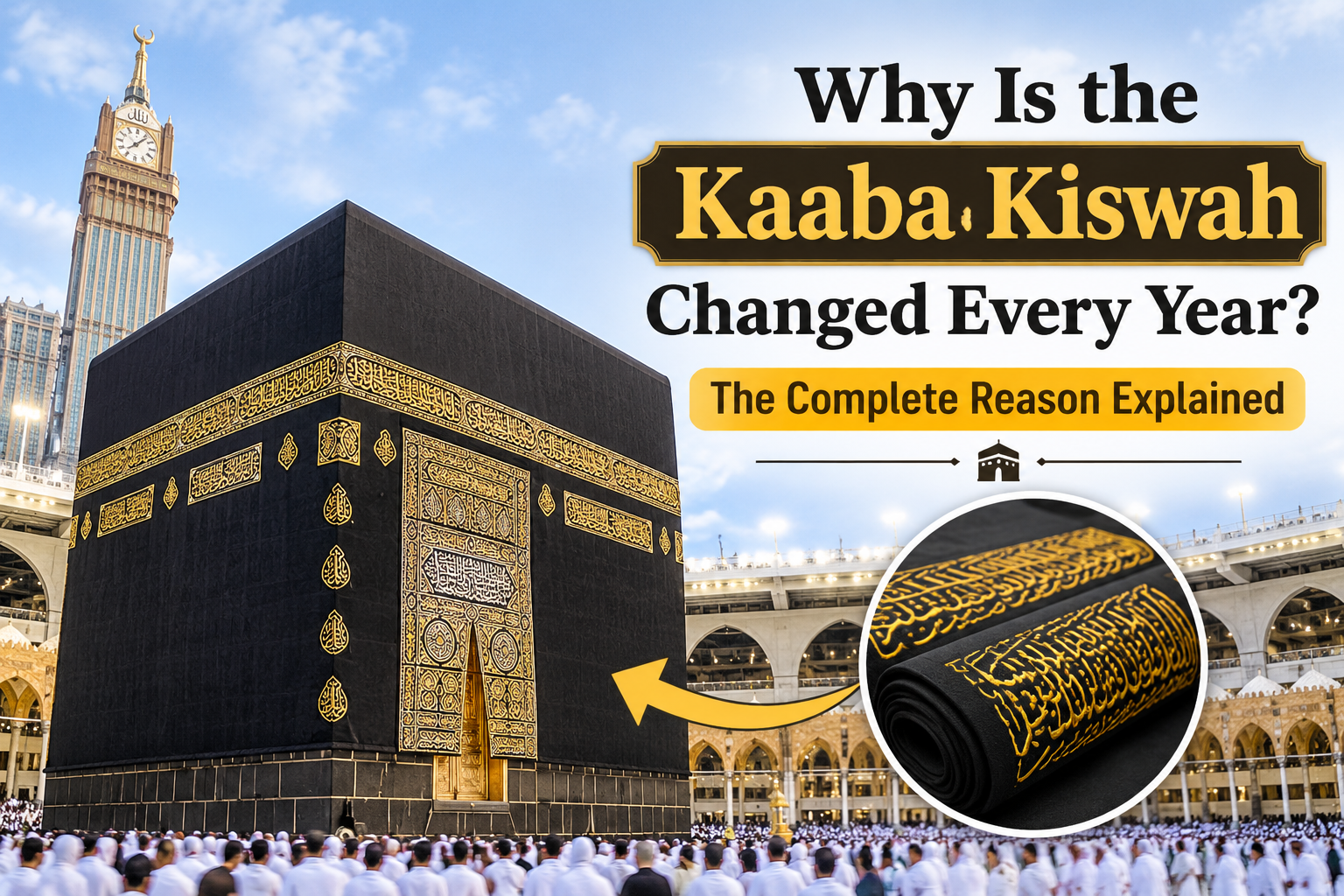
The Holy Kaaba in Makkah is one of the most sacred places in Islam, attracting millions of Muslims from around the world every year. One of the most remarkable sights is its beautiful black covering decorated with golden Quranic calligraphy, known as the Kaaba Kiswah. But have you ever wondered why the Kiswah is changed every year? Is it because the fabric becomes damaged, or is there a deeper religious, historical, and practical reason behind this tradition?
In this guide, we explore why the Kaaba Kiswah is replaced annually, how the new covering is made, what happens to the old Kiswah, and why its craftsmanship makes it so extraordinary.
What Is the Kaaba Kiswah?
The Kaaba Kiswah is the special cloth covering the Holy Kaaba in Masjid al-Haram, Makkah. Traditionally made from black silk, it features beautifully embroidered Quranic verses and Islamic designs using gold-plated and silver threads.
The Kiswah is more than a piece of fabric. It represents centuries of Islamic history, craftsmanship, devotion, and the importance Muslims attach to the sacred House of Allah.
The distinctive Kiswah Kaaba is carefully produced by skilled craftsmen using specialized techniques, premium materials, and detailed embroidery.
Why Is the Kaaba Kiswah Changed Every Year?
The Kaaba Kiswah is changed annually as part of a longstanding tradition of caring for and honoring the Holy Kaaba. The replacement is not simply about changing old fabric; it reflects the continuous dedication, preparation, and craftsmanship involved in preserving the covering of Islam’s holiest site.
1. Preserving the Kiswah’s Beauty and Quality
Throughout the year, the Kiswah is exposed to sunlight, heat, dust, humidity, and changing weather conditions in Makkah. Millions of pilgrims also visit the Grand Mosque, creating a busy environment around the Kaaba.
Over time, these conditions can affect the fabric, embroidery, and overall appearance of the covering. Replacing it annually helps maintain its beauty, quality, and dignified appearance.
2. Continuing a Historical Islamic Tradition
The tradition of covering the Kaaba dates back centuries, even before Islam. Over different historical periods, Muslim rulers and communities took responsibility for providing and maintaining its covering.
The annual replacement continues this legacy of reverence and care. Today, the process is managed by specialists at the King Abdulaziz Complex for Holy Kaaba Kiswa, where skilled workers dedicate their expertise to producing the new covering.
3. Honoring the Sacred House
The Kaaba holds a unique position in Islam. Muslims around the world face it during their daily prayers, making it a central symbol of unity.
The annual renewal of its covering reflects the importance, respect, and attention given to the sacred House. The process is carried out with precision, care, and a deep appreciation of its religious significance.
How Is the New Kaaba Kiswah Made?
The production of a new Kiswah is a highly specialized process that takes months of work. Skilled artisans carefully prepare the fabric, weave the silk, create the calligraphy, embroider the designs, and assemble the final covering.
The manufacturing process includes:
- Preparing and dyeing silk to achieve the distinctive black color.
- Weaving the fabric using specialized equipment.
- Printing Quranic verses and decorative patterns.
- Embroidering calligraphy using gold-plated and silver threads.
- Sewing and assembling individual sections.
- Inspecting the finished Kiswah for quality and accuracy.
Each stage requires precision and expertise to ensure the final covering meets the required standards.
What Makes the Kiswah Kaaba So Special?
The Kiswah is admired worldwide for its elegant appearance and intricate Islamic art. The golden Quranic inscriptions against the black silk create a striking design that reflects the beauty of Islamic calligraphy.
The embroidery is one of its most remarkable features. Quranic verses, decorative motifs, and inscriptions are carefully crafted using specialized threads. The Kaaba’s door curtain, known as the sitara, is also an important part of the Kiswah and features detailed embroidery.
Its materials, craftsmanship, design, and historical significance make the Kiswah an extraordinary example of Islamic artistic heritage.
What Happens to the Old Kiswah?
Many people wonder what happens after the old Kiswah is removed from the Kaaba.
The removed Kiswah is handled by the responsible authorities. Historically, pieces of the old covering have been preserved, gifted, or distributed for various purposes. Authentic pieces may be found in museums, private collections, and religious institutions.
This is why people often search online for a Gilafe Kaaba piece, original Kiswah fragments, or authentic pieces of the Kaaba covering.
However, buyers should be cautious when purchasing Kiswah pieces. Authenticity, documentation, provenance, and the seller’s credibility are important considerations when looking for genuine items.
Can You Buy a Kaaba Kiswah Piece Online?
Yes, people may come across Kiswah pieces offered through specialized sellers and Islamic heritage collections. If you are wondering, Is it possible to buy Kaaba Kiswah?, the answer depends on the availability, authenticity, and source of the particular piece.
Many collectors and Muslims interested in Islamic history look for a genuine Gilafe Kaaba piece to preserve as a meaningful keepsake.
If you are searching for where to buy Kaaba Kiswah, always check the product description, seller transparency, authenticity information, and whether the piece comes with reliable provenance.
You can explore available Kiswah-related products and Islamic heritage collections at KaabaKiswa.com.
Why Does the Annual Kiswah Change Matter to Muslims?
The yearly replacement of the Kiswah is a reminder of the importance of preserving Islamic heritage, maintaining the sacred sites, and honoring the traditions connected to the Holy Kaaba.
For Muslims, the Kaaba is not simply an architectural structure. It represents unity, worship, history, and a shared spiritual direction. The Kiswah adds another layer of beauty and historical significance, making its annual renewal a moment of interest for Muslims worldwide.
Conclusion
The Kaaba Kiswah is changed every year to continue a historic tradition of care, preserve its appearance and quality, and honor the sacred House of Allah. Behind the beautiful black covering is months of preparation, skilled craftsmanship, intricate Quranic calligraphy, and a legacy that has continued across generations.
From its silk fabric to its gold-embroidered inscriptions, every detail of the Kiswah reflects dedication and artistry. Understanding why the Kiswah is changed each year helps us appreciate not only its beauty but also the history and significance behind this remarkable Islamic tradition.
If you are interested in learning more about Kaaba Kiswah history, Islamic calligraphy, or exploring Kiswah-inspired heritage pieces, visit Kaaba Kiswa and discover more about this extraordinary symbol of Islamic history and craftsmanship.