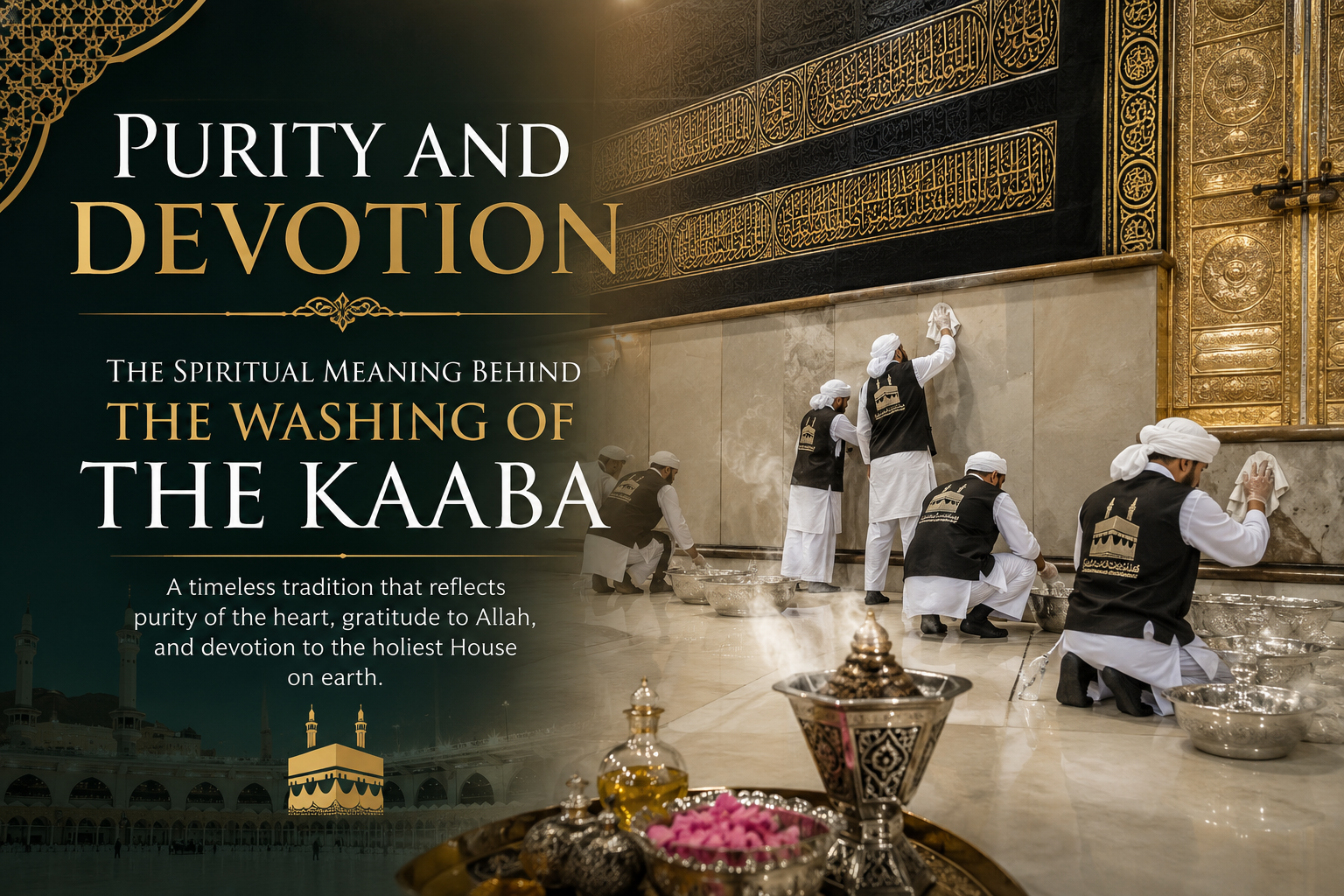
In Islam, cleanliness is far more than a physical necessity—it is a reflection of faith, humility, and devotion to Allah. One of the most remarkable examples of this principle is Ghusl-e-Kaaba, the sacred ceremony in which the interior of the Holy Kaaba in Makkah is washed and perfumed. This centuries-old tradition symbolizes respect for the holiest place in Islam while reminding Muslims around the world about the importance of both physical and spiritual purification.
Every year, millions of Muslims from countries such as the UK, the United States, Canada, Australia, and across the Middle East eagerly follow this special event. Watching the golden doors of the Kaaba open for the washing ceremony fills believers with awe and inspires them to reflect on their own relationship with Allah. Although only selected guests are allowed inside, the ceremony carries a universal message that reaches every Muslim regardless of where they live.
The Historical Significance of Cleaning the House of Allah
The history of washing the Kaaba dates back to the time of Prophet Ibrahim (Abraham, peace be upon him) and his son Prophet Ismail (peace be upon him). After they built the Kaaba by Allah’s command, they were instructed to keep His sacred House pure for those who would worship there.
Allah says in the Quran:
“And We commanded Ibrahim and Ismail, ‘Purify My House for those who perform Tawaf and those who stay there for devotion and those who bow and prostrate.'” (Surah Al-Baqarah 2:125)
This divine command established purity as an essential characteristic of the Kaaba. Centuries later, when Prophet Muhammad (peace be upon him) entered Makkah after its peaceful conquest, one of his first actions was to remove the idols that had been placed inside and around the Kaaba. By restoring it to the worship of One Allah alone, he reaffirmed the importance of keeping both the sacred structure and its purpose completely pure.
Since then, the tradition of caring for the Kaaba has continued through successive generations under the custodianship of the Kingdom of Saudi Arabia.
How the Kaaba Is Washed Today
The modern washing ceremony is conducted with great respect, dignity, and attention to detail. Usually held once each year during the Islamic month of Muharram, the event is attended by senior Islamic scholars, government officials, and the trusted custodians of the Kaaba.
The ceremony generally follows several important stages:
- Opening the Sacred Doors: The golden doors of the Kaaba are unlocked by its hereditary keyholders, allowing invited guests to enter.
- Washing with Zamzam Water: Soft cloths are dipped into Zamzam water mixed with natural rosewater, traditionally sourced from Taif. The marble floor and lower walls are carefully wiped by hand.
- Drying and Polishing: Every surface is gently dried to preserve the beauty of the interior.
- Applying Fragrance: Pure oud oil, musk, and other premium natural perfumes are applied to the walls, creating a pleasant fragrance that remains for a long time.
- Burning Bakhoor: High-quality bakhoor is burned inside elegant incense burners, filling the Kaaba with a rich and calming aroma that enhances the spiritual atmosphere.
Although the process itself is simple, every step reflects deep reverence for the sacred sanctuary.
A Powerful Reminder of Spiritual Purification
The washing of the Kaaba teaches Muslims an important lesson beyond physical cleanliness. While the Kaaba is purified with water and fragrance, believers are encouraged to purify their own hearts through sincere repentance, prayer, remembrance of Allah, and good character.
Just as dust naturally gathers on any building over time, negative habits, sins, and distractions can slowly affect the human heart. Islam encourages regular spiritual cleansing through istighfar, reading the Quran, performing Salah, and seeking Allah’s forgiveness. In this way, Ghusl-e-Kaaba serves as a beautiful symbol of the continuous effort every Muslim should make to strengthen their faith.
For Muslims living far from Makkah—in cities such as London, New York, Toronto, Sydney, or Dubai—the annual ceremony offers a meaningful connection to Islam’s holiest site. It reminds believers that while they may be physically distant from the Kaaba, they can remain spiritually close through sincere worship and obedience to Allah.
Conclusion
The annual washing of the Holy Kaaba is much more than a ceremonial tradition. It represents purity, reverence, gratitude, and unwavering devotion to Allah. Rooted in the legacy of Prophet Ibrahim (AS) and upheld throughout Islamic history, the ceremony continues to inspire Muslims around the world.
Its message is timeless: just as the House of Allah is carefully cleaned and perfumed with the finest materials, every believer should strive to cleanse their heart with faith, repentance, and righteous deeds. By reflecting on the meaning behind Ghusl-e-Kaaba, Muslims are reminded that true purity begins within, and that maintaining a clean heart is one of the greatest acts of devotion in Islam.