For centuries, the Kiswah has stood as a universal symbol of Islamic unity, devotion, and extraordinary craftsmanship. Covering the Holy Kaaba in Makkah, this magnificent black silk cloth represents one of the most revered textiles in the Islamic world. To hold a genuine Kaaba Kiswah fragment in your hands is an emotional and spiritual experience that words can barely describe. For British Muslims looking to acquire a real Gilaf-e-Kaaba piece in the UK, these rare textiles are more than collectibles—they are treasured historical keepsakes that connect their owners with one of Islam’s holiest sites.
Unfortunately, the growing demand for authentic Kiswah fragments has also created opportunities for counterfeit sellers. High-quality replicas are now widely available across online marketplaces, making it increasingly difficult for buyers to distinguish genuine artifacts from modern reproductions. Whether you are an art collector, an investor, or a believer seeking a meaningful Islamic heirloom, understanding how to verify Kiswah authenticity is essential before making a purchase.
The Anatomy of an Authentic Kiswah Fragment
The Kiswah is produced using traditional techniques perfected over generations by highly skilled artisans in Makkah. Authenticity can often be determined by carefully examining several distinctive physical characteristics.
1. Examine the Silk Quality
Authentic Kiswah is woven exclusively from premium natural silk. Unlike synthetic fabrics such as polyester or nylon, genuine silk has a substantial weight and a soft yet structured texture. Its black finish appears rich and elegant with a subtle matte appearance rather than an overly glossy shine.
When touched, authentic silk feels smooth without being slippery, and the fabric drapes naturally due to its density. Counterfeit versions often use inexpensive synthetic fibers that feel lighter, thinner, and unnaturally reflective under bright lighting.
2. Inspect the Raised Calligraphy
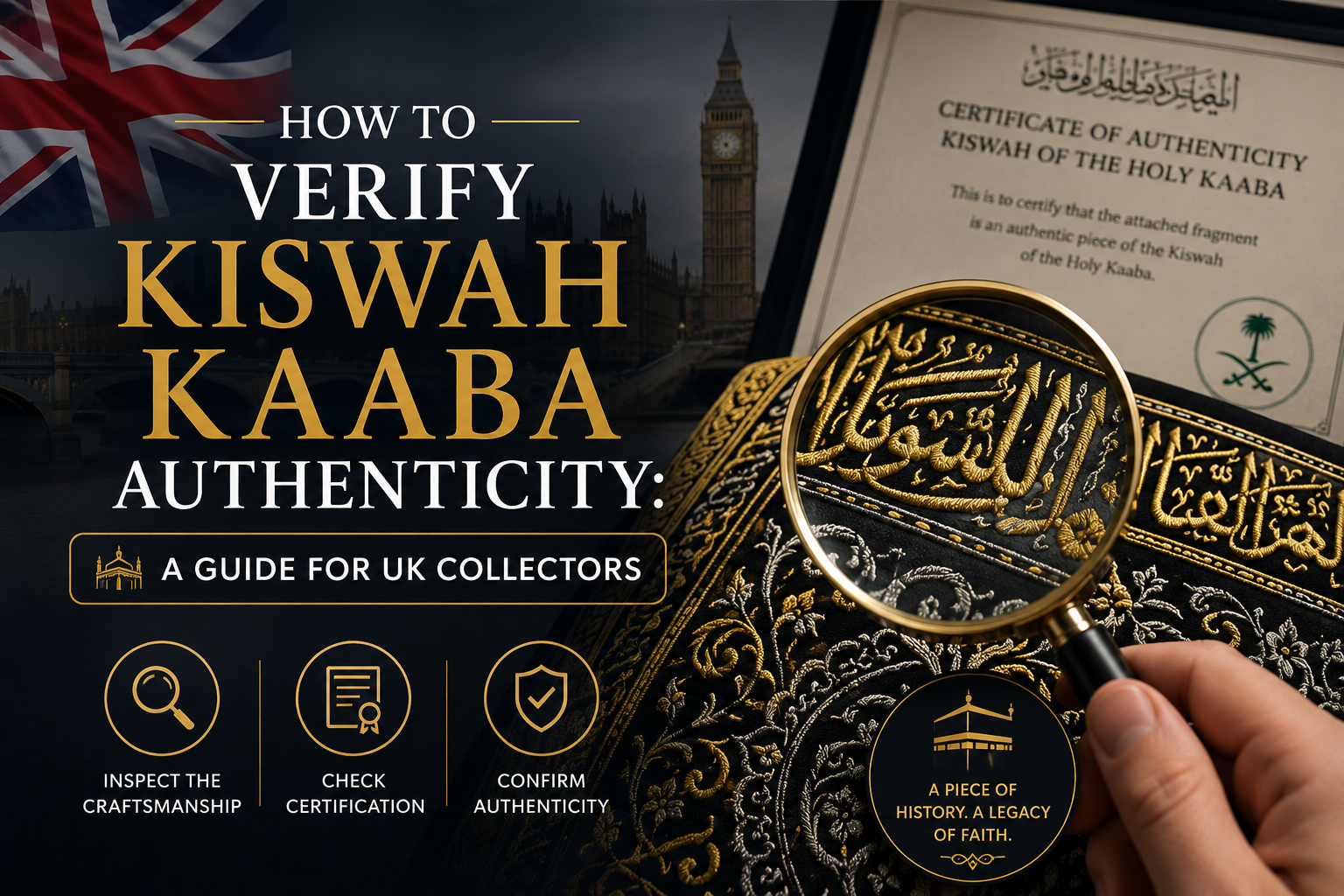
One of the defining characteristics of an authentic Kiswah is its intricate Quranic calligraphy. These verses are not simply stitched onto the fabric; they are carefully built using multiple layers of cotton padding before being wrapped with silver or gold-plated silver threads.
This creates a distinctive three-dimensional appearance that can easily be felt by hand. The embroidery should appear clean, symmetrical, and exceptionally detailed. If the lettering looks flat, uneven, or poorly finished, it is a strong indication that the fragment may not be genuine.
Collectors should also inspect the reverse side of the embroidery. Authentic pieces typically display neat stitching patterns that reflect the precision of professional craftsmanship rather than mass production.
3. Verify the Woven Background Pattern
Many first-time buyers assume the black areas of the Kiswah are plain fabric, but this is not the case. Genuine Kiswah silk contains an elegant jacquard weave featuring repeated Islamic phrases woven directly into the cloth.
These subtle patterns commonly include sacred inscriptions such as:
- Ya Allah
- Ya Rahman
- Subhanallahi wa bihamdihi
The arrangement, spacing, and repetition of these woven designs follow established production standards for each Kiswah. Comparing these details with verified examples can provide valuable clues regarding authenticity.
Documentation and Provenance Matter
Physical characteristics are only part of the verification process. Equally important is the documented history of the fragment, commonly referred to as its provenance.
A trustworthy seller should be able to explain where the Kiswah piece originated, when it was removed from the Kaaba, and how it entered private ownership. Authentic fragments are often accompanied by detailed certificates, ownership records, invoices, or supporting documentation that establish a clear chain of custody.
Collectors should be cautious of vague descriptions such as “authentic from Saudi Arabia” without any supporting evidence. A genuine historical artifact deserves transparent documentation that supports every stage of its ownership history.
Digital Verification and Expert Certification
Modern technology has made authentication more reliable than ever. Reputable dealers increasingly work with recognized Islamic heritage specialists and professional authentication services that carefully examine historical textiles before issuing certification.
Some collectors also seek verification through established museums and institutions specializing in Islamic artifacts. Independent examination by qualified experts adds another level of confidence, particularly for rare or valuable Kiswah sections.
Before purchasing, ask whether the certificate can be independently verified and whether the issuing organization maintains records that confirm the authenticity of the fragment.
Practical Tips Before Buying
Before committing to any purchase, take a careful and methodical approach.
- Request high-resolution photographs of both the front and back of the fragment.
- Ask for close-up images showing the embroidery, silk weave, and edges.
- Confirm the approximate production year whenever possible.
- Ask which section of the Kiswah the fragment originally came from.
- Review the seller’s reputation, customer feedback, and previous sales history.
- Be cautious of prices that appear significantly below normal market value, as genuine Kiswah fragments are naturally rare.
Buying from established Islamic art dealers or reputable collectors is generally far safer than purchasing from anonymous online listings with little supporting information.
Final Thoughts
Owning an authentic Kiswah fragment is both a privilege and a responsibility. Beyond its financial value, it represents a remarkable piece of Islamic heritage that has adorned the Holy Kaaba and witnessed countless moments of worship throughout its history.
By carefully examining the silk, embroidery, woven patterns, documentation, and certification, UK collectors can greatly reduce the risk of purchasing counterfeit items. Taking the time to verify every detail ensures that your collection includes a genuine piece of Islamic history whose significance will endure for generations.