
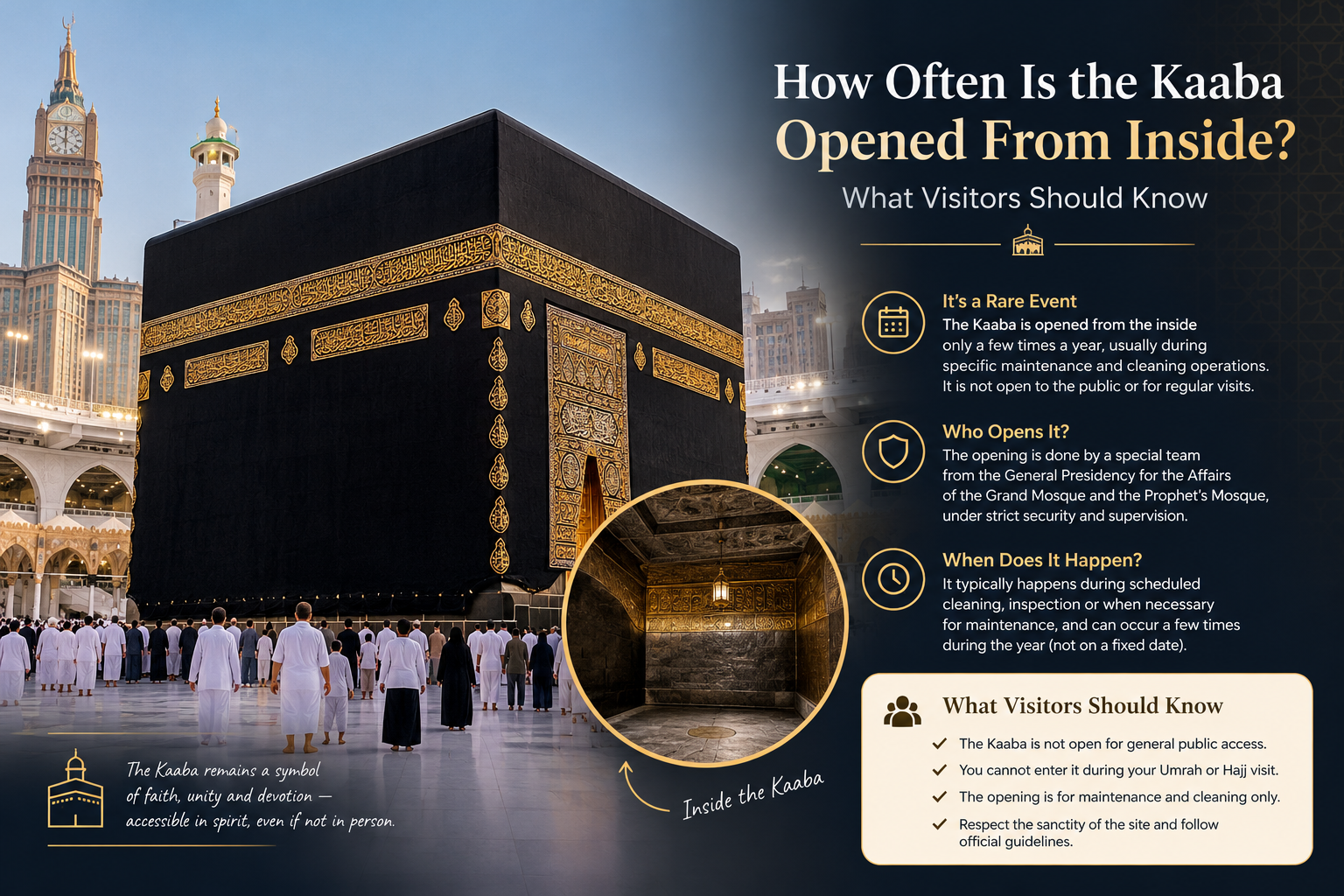
How often is the Kaaba opened? The Kaaba is the focal point of prayer for Muslims across the world, yet very few people ever see its interior. During Hajj and Umrah, pilgrims walk around the sacred building as part of Tawaf, while its large door remains closed to ordinary visitors. This raises a common question: when does the door open, and how frequently can people enter?
There is no fixed public visiting schedule for the inside of the Kaaba. Entry is controlled by the Saudi authorities and arranged for approved occasions. To understand this practice, it helps to look at the building’s upkeep, its internal features and the special ceremony performed by its custodians.
Does the Kaaba Open on a Regular Schedule?
The Kaaba opened for authorised activities does not follow a regular public timetable. Its door is opened when official visits, maintenance work or other approved occasions have been arranged, rather than according to a schedule available to all pilgrims.
The number and timing of these occasions can vary. Some involve invited guests or officials, while others relate to cleaning, inspection or preservation. A visitor performing Umrah should therefore not expect to enter the building, even if they can see its entrance during Tawaf.
Announcements about particular ceremonies can provide evidence of an opening on a specific date, but one event does not establish a permanent schedule. Anyone seeking current information should consult official Saudi announcements instead of relying on old photographs or social media claims.
Who Is Allowed to Enter the Kaaba?
Access is limited to people authorised for a particular occasion. Depending on the event, those present may include officials, invited representatives and individuals responsible for the Kaaba’s care. The occasions when the Kaaba opened are controlled by the responsible Saudi authorities, and entry depends on specific permission.
Being in Makkah, holding an Umrah visa or completing Hajj does not automatically grant permission to enter. The arrangements are managed separately from the normal pilgrimage activities carried out in Masjid al-Haram.
Be cautious if someone offers guaranteed entry in exchange for payment. Check information through official channels and follow instructions from mosque staff. Pilgrims can fulfil their religious duties without entering the building itself.
How Is the Inside of the Kaaba Cleaned?
The interior receives special care, including a ceremonial washing associated with the building’s custodianship. This is a planned religious and maintenance activity, not an opportunity for the general public to visit. When the Kaaba opened for cleaning, authorised participants carefully maintain its interior and protect its important surfaces.
During the ceremony, authorised participants clean interior surfaces and the floor. Accounts of the process describe the use of Zamzam water mixed with fragrant substances, including rose water, followed by drying and perfuming the space.
The precise arrangements may differ between occasions. The ceremony also involves coordination so that the work can be completed carefully and the building’s interior remains protected.
For a recent example, the Saudi Press Agency reported a Kaaba washing ceremony on 30 June 2026. Readers can review the official report for details of that event.
What Can Be Found Inside the Kaaba?
Although photographs of the interior are much less common than exterior images, descriptions identify several structural features. Descriptions of the interior help explain what visitors may see when the Kaaba opened for an authorised occasion.
Three Supporting Columns
Three columns stand inside the Kaaba and help support its roof. They are among the most notable features mentioned in descriptions of the interior. Their condition is considered during cleaning and maintenance work.
The Floor and Lower Surfaces
The floor has stone and marble finishes, rather than the black embroidered textile associated with the exterior. These surfaces require routine care to maintain their condition.
Walls and Interior Finishes
The inner walls form part of the building’s protected interior. Their finishes and surfaces are looked after during authorised maintenance activities. The interior looks simpler than the embroidered exterior.
The Roof Structure
The upper section also needs regular inspection and care. Preservation work may involve inspection and maintenance of internal and external elements, depending on the work required and the arrangements made by the authorities.
These features offer a glimpse into the building’s physical design, but the Kaaba’s importance is not measured by its interior decoration. Its central place in Muslim worship comes from its religious significance.
Is the Kiswah the Same as the Kaaba’s Interior Covering?
The Kiswah is the textile that covers the outside of the Kaaba. Its appearance is familiar to pilgrims: black fabric decorated with Arabic embroidery and a prominent embroidered belt known as the Hizam.
The term Kaaba Kiswah generally refers to this exterior covering, not to the walls or furnishings inside the building. The Kiswah covers the outside, not the Kaaba’s interior.
Its embroidery includes carefully arranged inscriptions and decorative elements. Anyone interested in Kiswah Kaaba calligraphy can explore the relationship between Arabic lettering, textile craftsmanship and the covering’s distinctive design.
Why Do People Value Original Kiswah Pieces?
Some people are interested in Kiswah textiles because of their connection with the Kaaba and the specialist work involved in their production. However, not every textile described as a Kiswah piece has the same origin, size, condition or documentation.
The original Kaaba Kiswah price can vary according to the item’s material, dimensions, embroidery, condition and documented provenance. A careful buyer should examine the specific product information and supporting documents before making a decision.
If you are looking for where to buy Kaaba Kiswah, compare sellers on the clarity of their descriptions and the information they provide about each piece. Do not assume that a label or photograph alone proves an item’s origin.
Is Entry to the Kaaba Permitted During Pilgrimage?
For ordinary pilgrims, entering the Kaaba is not part of the standard Hajj or Umrah itinerary. Tawaf is performed around the building, and visitors can pray in the surrounding Grand Mosque in accordance with the applicable arrangements. Even when the Kaaba opened for special visits, ordinary pilgrims should not expect permission to enter.
It is better to plan your pilgrimage around confirmed activities rather than an uncertain possibility of entry. Follow official guidance, allow sufficient time for worship and avoid anyone claiming to sell guaranteed access.
Learning about the interior through reliable reports and educational resources is a practical alternative for visitors who want to understand the building more fully.
Frequently Asked Questions
Is the Kaaba opened every week?
There is no general weekly public-entry schedule. Openings are arranged for specific authorised purposes, and the timing can vary.
Does the Kaaba open during Ramadan?
Visitors should not assume that the interior will be opened during Ramadan. Any special access depends on official arrangements and announcements.
How often is the Kaaba washed?
The washing ceremony is a recurring practice, but readers should check official announcements for the latest confirmed date rather than assume a fixed interval.
Can tourists enter the Kaaba?
General tourist or pilgrim access to the interior is not normally available. Entry requires specific authorisation.
Conclusion
The Kaaba’s door opens for designated occasions, not for routine public visits. Its interior is maintained through controlled cleaning and preservation, while access is arranged by the responsible authorities. For most pilgrims, the opportunity to worship at Masjid al-Haram and perform Tawaf remains the practical way to experience the sacred site. Knowing when the Kaaba opened helps pilgrims understand why interior access cannot be included in ordinary Hajj or Umrah plans.
The Kiswah offers another perspective on the Kaaba’s heritage through its textile work and Arabic inscriptions. To explore Islamic products and available Kiswah-related items, visit Kaaba Kiswa and review the details provided for each product.