
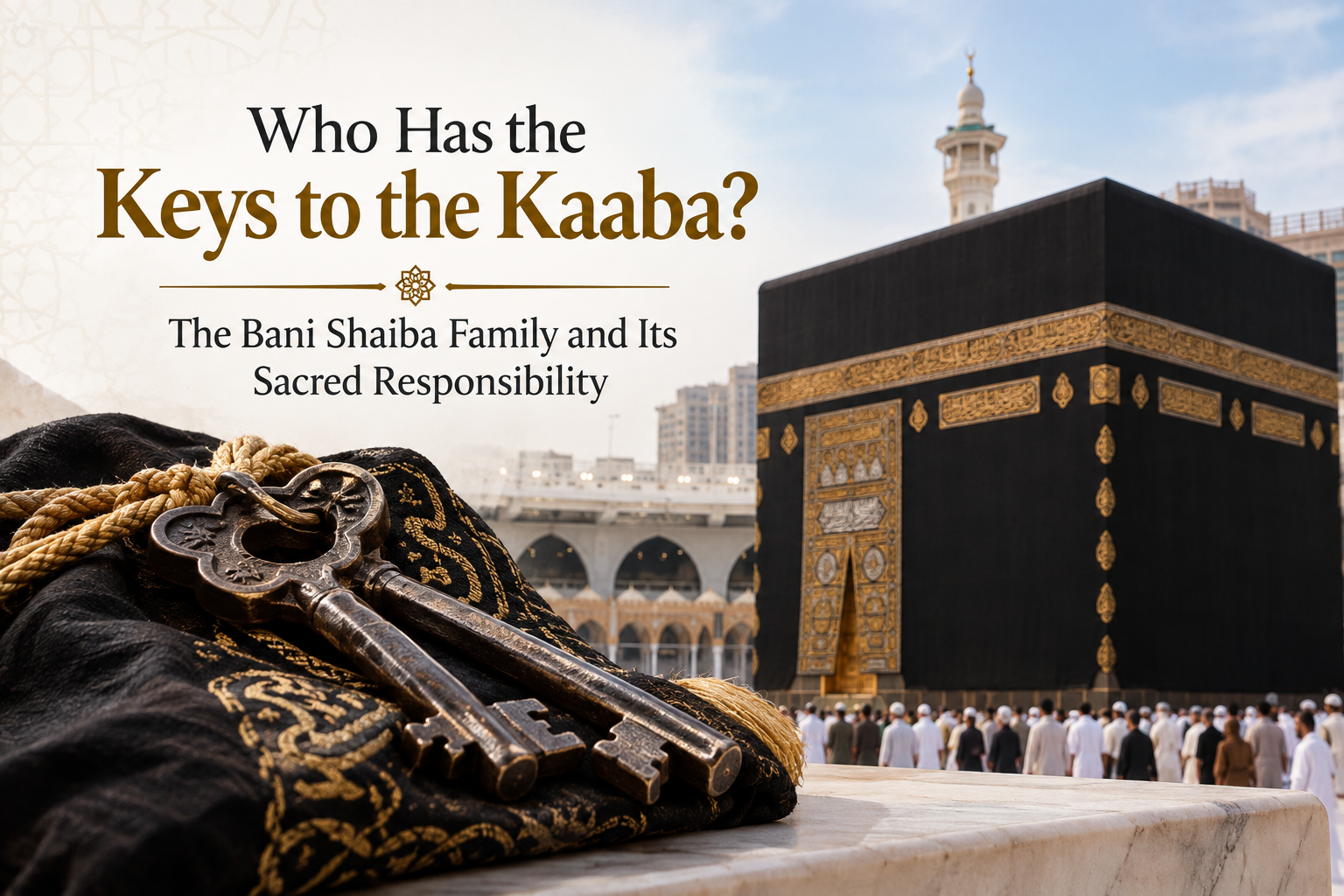
Who has the keys to the Kaaba in Makkah? This question interests Muslims around the world because the Holy Kaaba holds a unique place in Islamic history and religious life. While millions of pilgrims visit Masjid al-Haram for Hajj and Umrah, the responsibility for holding the Kaaba’s keys belongs to a family entrusted with this duty centuries ago. Understanding who has the keys to the Kaaba also helps explain how this historic responsibility has been preserved across generations.
The Bani Shaiba family, also known as Banu Shaybah, has traditionally held the responsibility of safeguarding the keys and managing access to the Kaaba. This role, known as Sidana or Hijaba, represents a historic trust passed down through generations. Knowing who has the keys to the Kaaba reveals the history of its custodianship and the traditions that protect Islam’s holiest site.
Who Has the Keys to the Kaaba Today?
The keys to the Kaaba are traditionally held by the Bani Shaiba family, whose responsibility dates back to the time of Prophet Muhammad ﷺ. Their role is not simply about possessing a key; it represents the duty of protecting the Kaaba’s access and maintaining an established religious tradition. For those asking who has the keys to the Kaaba today, the answer remains connected to the Bani Shaiba family and its inherited custodial role.
The family’s responsibility is associated with Sidana, the guardianship of the Kaaba. This duty has continued across generations, making the family an important part of the Kaaba’s historical heritage.
Although the keys are associated with the family, entry into the Kaaba is controlled under the relevant Saudi authorities. The general public cannot freely enter the building, and access is arranged according to official decisions and procedures.
Who Gave the Keys of the Kaaba to Bani Shaiba?
The history of the Kaaba’s keys is connected with Uthman ibn Talha, a member of the family responsible for the Kaaba’s custodianship before Islam.
According to Islamic tradition, when Prophet Muhammad ﷺ entered Makkah during its conquest, he returned the key to Uthman ibn Talha rather than permanently taking the responsibility away from his family. Islamic accounts connect this event with the Quranic instruction in Surah An-Nisa, verse 58, which commands that trusts be returned to their rightful owners.
This event is remembered as an important example of fulfilling an entrusted responsibility. The continued association of the Bani Shaiba family with the keys reflects the lasting significance of that historical decision.
The story also answers a common question among pilgrims: who has the keys to the Kaaba, and why has this responsibility remained with the same family for generations?
What Is the Responsibility of the Bani Shaiba Family?
The family’s traditional role is known as Sidana or Hijaba. It is associated with the custodianship of the Kaaba and the responsibility connected with its keys. The question of who has the keys to the Kaaba is closely linked to the family’s traditional duty of safeguarding the sacred building’s keys.
The main aspects of this historic duty include:
- Safeguarding the keys: Maintaining responsibility for the keys entrusted to the family.
- Respecting established traditions: Preserving the longstanding custodianship associated with the Kaaba.
- Supporting controlled access: The opening of the Kaaba takes place according to authorised arrangements rather than unrestricted public entry.
- Preserving a historical trust: Continuing a responsibility recognised in Islamic historical accounts.
The role is distinct from the broader management of Masjid al-Haram, which falls under Saudi authorities. The family’s custodianship is an enduring historical tradition rather than a licence for the public to enter the Kaaba whenever they wish.
Can Ordinary Muslims Enter the Kaaba?
Many pilgrims wonder whether they can enter the Kaaba during Hajj, Umrah, or a visit to Makkah. In general, ordinary visitors do not have routine access to its interior.
People who ask who has the keys to the Kaaba should also understand that holding the keys does not mean the building is open to unrestricted public access.
The opening of the Kaaba is arranged on specific occasions under official authority. Therefore, performing Hajj or Umrah does not automatically provide permission to enter the building.
Muslims can still experience the spiritual significance of the Kaaba by performing Tawaf, offering prayers in Masjid al-Haram, and learning about its history and religious importance.
What Is Inside the Kaaba?
The interior of the Kaaba differs from its richly decorated exterior. Accounts and photographs from authorised visits have shown a relatively simple space with columns supporting the roof, lamps, and interior fittings. Many visitors researching who has the keys to the Kaaba also want to understand what lies beyond its restricted entrance.
Access is restricted, so most pilgrims will never see the interior personally. Nevertheless, the Kaaba’s significance does not depend on being able to enter it. Muslims worldwide turn towards the Kaaba during their daily prayers, making it the focal point of Islamic worship.
Its black outer covering, known as the Kiswah, is another important part of its heritage. The Kiswah features embroidered Quranic verses and Islamic calligraphy, traditionally produced with great care.
What Is the Kaaba Kiswah, and Why Is It Special?
The Kaaba Kiswah is the textile covering placed over the Holy Kaaba. Its distinctive black fabric and embroidered calligraphy make it one of the most recognisable features of the sacred structure.
The Kiswah is associated with skilled craftsmanship, intricate embroidery, and a long tradition of textile production. Its Quranic inscriptions and decorative details have significant historical and artistic value.
This heritage also explains why people search for terms such as Kaaba Kiswah calligraphy, original Kaaba Kiswah price, and Gilafe Kaaba piece. However, the price and availability of an individual piece depend on factors such as its provenance, dimensions, condition, documentation, and authenticity.
A genuine Kiswah piece should be assessed carefully. Buyers should request clear information about its origin and any supporting documentation instead of relying solely on photographs or a seller’s description.
Is It Possible to Buy an Authentic Kaaba Kiswah Piece?
Yes, authentic Kiswah pieces may be available through specialised sellers, depending on their stock and provenance. However, owning a piece of Kiswah is different from owning the Kaaba’s keys or having access to its interior.
If you are researching where to buy Kaaba Kiswah or how to identify an authentic piece, focus on transparent product information, credible provenance, condition, and supporting certificates where available.
Before making a purchase, consider these points:
- Ask about the piece’s documented origin.
- Check its size, material, condition, and embroidered details.
- Review any certificate or supporting documentation.
- Confirm the total cost, shipping arrangements, and possible import charges.
- Make sure the seller clearly explains what is being offered.
For buyers exploring options online, searches such as buy Kiswah Kaaba online and how do I buy authentic Kaaba Kiswah can help begin the research process. Still, verify each seller’s claims before purchasing.
Explore Kaaba Kiswah Heritage at Kaaba Kiswa
The history of the Bani Shaiba family shows how responsibility and trust have remained closely connected with the Holy Kaaba across generations. The Kiswah represents another dimension of this heritage through its textile craftsmanship, Quranic inscriptions, and distinctive calligraphy.
If you are interested in learning more about the Kaaba Kiswah and exploring available pieces, visit Kaaba Kiswa. Review the product descriptions, provenance details, and available documentation carefully to make an informed decision.
Whether you are researching the history of the Kaaba’s keys or considering an authentic Kiswah piece, understanding its background helps you appreciate the heritage behind it.
Frequently Asked Questions
Who has the keys to the Kaaba?
The Bani Shaiba family traditionally holds the keys to the Kaaba, maintaining its historic custodianship known as Sidana.
Who returned the Kaaba’s keys to the family?
Islamic historical accounts describe Prophet Muhammad ﷺ returning the keys to Uthman ibn Talha after the conquest of Makkah.
Can anyone buy the keys to the Kaaba?
No. The keys are associated with a specific historic custodianship and are not ordinary items available for public purchase.
Can visitors enter the Kaaba during Umrah?
Routine entry is not available to ordinary pilgrims. Access is restricted and arranged under official authority.
Where can I learn about authentic Kaaba Kiswah pieces?
Visit Kaaba Kiswa to explore relevant information and available products. Check provenance, documentation, and seller details before making a purchase.
Conclusion
The answer to “Who has the keys to the Kaaba?” lies in the longstanding custodianship of the Bani Shaiba family. Their responsibility is connected with a historic trust dating back to the time of Prophet Muhammad ﷺ and remains an important part of the Kaaba’s heritage.
Learning about the keys, the family’s role, and the Kiswah offers a deeper understanding of the traditions surrounding Islam’s holiest site. To continue exploring the history and craftsmanship of the Kaaba Kiswah, visit Kaaba Kiswa and review the available information about authentic pieces.