The Kaaba in Makkah is one of the most sacred places in Islam. Its beautiful black covering, known as the Kaaba Kiswah, is recognised around the world for its elegant gold Quranic embroidery. These gold Quranic inscriptions are much more than decorative designs. They carry deep Islamic meanings, reflect the importance of the Holy Quran and represent the spiritual beauty of the Sacred House.
But what do the gold Quranic inscriptions on the Kaaba Kiswah actually mean? Which Quranic verses are written on it, and why are they embroidered in gold? Understanding the Kiswah Kaaba calligraphy helps Muslims appreciate the religious significance, craftsmanship and history behind this remarkable covering.
What Are the Gold Quranic Inscriptions on the Kaaba Kiswah?
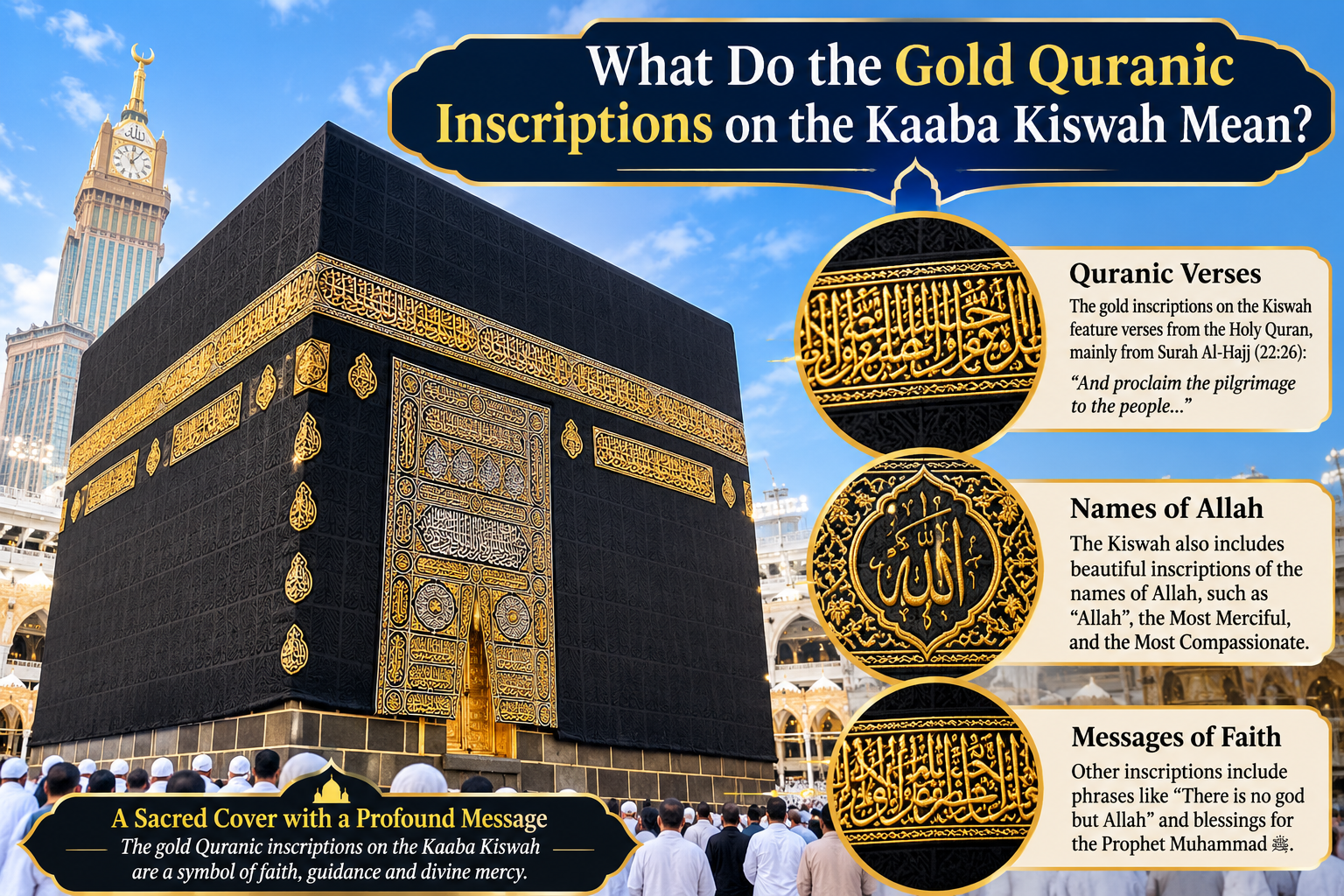
The gold inscriptions on the Kaaba Kiswah consist of carefully embroidered Arabic calligraphy featuring Quranic verses, Islamic expressions and the names of Allah. Skilled craftsmen create these intricate designs using traditional embroidery techniques.
The inscriptions are arranged across different sections of the black covering, including the decorative belt known as the Hizam. These gold Quranic inscriptions highlight important Islamic beliefs through carefully embroidered Arabic verses. This golden belt runs around the upper part of the Kaaba and contains some of the most recognisable Quranic calligraphy.
The contrast between the black silk background and golden embroidery makes the inscriptions visually distinctive. However, their real importance comes from the sacred words they represent.
What Do the Quranic Verses on the Kiswah Mean?
The Quranic inscriptions selected for the Kiswah communicate important Islamic beliefs, including the oneness of Allah, His greatness, mercy and authority.
Some inscriptions feature verses and expressions that remind Muslims of their faith and relationship with Allah.
1. Ayat al-Kursi: Recognising Allah’s Greatness
Ayat al-Kursi, found in Surah Al-Baqarah (2:255), is among the most significant verses in the Quran. It describes Allah’s absolute authority, knowledge and power over everything in the heavens and the earth.
Its message reminds Muslims that Allah is everlasting, independent and aware of all things. The verse holds a special place in Islamic worship and is widely recited by Muslims.
2. Surah Al-Ikhlas: The Oneness of Allah
Surah Al-Ikhlas (112:1-4) explains the fundamental Islamic belief in Tawheed, the absolute oneness of Allah.
Its message establishes that Allah is One, eternal and unlike anything in creation. This short chapter carries a powerful meaning and reminds Muslims that worship belongs to Allah alone.
3. Bismillah: Beginning in the Name of Allah
The phrase Bismillah ir-Rahman ir-Rahim means “In the name of Allah, the Most Gracious, the Most Merciful.”
It reminds Muslims to begin their actions by remembering Allah and seeking His blessings. This beautiful expression appears in Islamic calligraphy and holds an important place in everyday Muslim life.
4. Other Quranic Verses and Islamic Expressions
Different sections of the Kiswah feature Quranic passages and religious expressions. Their messages reflect Allah’s greatness, the importance of worship and the spiritual significance of the Kaaba.
Each inscription is carefully designed so that the Arabic letters remain clear, balanced and beautifully connected.
Why Are the Quranic Inscriptions Written in Gold?
Gold embroidery gives the Kaaba Kiswah its distinctive appearance, but its use also reflects the exceptional craftsmanship involved in producing the covering.
The embroidery uses specialised threads, including gold-wrapped and silver-wrapped materials. Skilled artisans carefully stitch Arabic calligraphy into the fabric using traditional methods. The gold Quranic inscriptions require skilled workmanship to preserve the clarity and detail of every Arabic letter.
The golden colour creates a striking contrast against the black silk and makes the Quranic inscriptions clearly visible from a distance.
The purpose of these inscriptions is not simply decoration. They honour the sacred words of the Quran and reflect the importance of Islamic calligraphy in Muslim culture.
What Makes Kiswah Kaaba Calligraphy Special?
Islamic calligraphy is an important art form that has developed over centuries. It allows Arabic writing to express religious messages through carefully balanced shapes, lines and patterns.
The calligraphy on the Kaaba Kiswah requires exceptional skill because every letter must be embroidered with precision. Even small details matter when creating Quranic inscriptions.
The craftsmen work with specialised equipment and carefully prepared designs to maintain consistency across the fabric.
For Muslims and Islamic art enthusiasts, Kaaba Kiswa calligraphy represents a connection between faith, craftsmanship and centuries of Islamic artistic tradition.
Why Is the Kaaba Kiswah So Expensive?
Many people wonder, why is the Kiswa Kaaba so expensive? The answer lies in its materials, craftsmanship and production process.
The Kiswah is made using high-quality silk fabric and contains elaborate embroidery with gold and silver-wrapped threads. Producing it requires skilled artisans, specialised equipment and considerable time.
Its creation involves several stages, including fabric preparation, dyeing, printing, embroidery and final assembly.
The value of the Kiswah is also connected to its religious and historical importance. It is not an ordinary textile but the covering of Islam’s holiest sanctuary.
Can You Buy Kaaba Kiswah Online?
A common question among collectors and Muslims is: Can you buy Kaaba Kiswah online?
Yes, pieces described as Kiswah fragments or historical Kiswah textiles may be available through specialist sellers. However, buyers should understand that ordinary commercial fragments are not the same as the complete covering currently placed on the Kaaba.
If you are researching where to buy Kaaba Kiswah, always check the seller’s reputation, product description and available documentation.
Before purchasing, ask whether the piece comes with genuine Kiswah fragment certification and whether its origin can be independently verified.
People searching for an original kaaba kiswah price should also remember that prices vary according to the fragment’s size, condition, embroidery, provenance and supporting documentation.
Whether you are looking for a gilafe kaaba piece for sale or exploring options to buy Kiswah Kaaba online, authenticity should always be your priority.
Why the Gold Inscriptions Matter to Muslims
The gold Quranic inscriptions are a reminder of the teachings of Islam. They communicate the greatness of Allah and encourage believers to remember the Quran’s message.
For many Muslims, the Kiswah represents deep spiritual respect, Islamic heritage and the beauty of sacred craftsmanship.
Its inscriptions also preserve the tradition of Arabic calligraphy, connecting contemporary generations with an artistic practice that has remained important throughout Islamic history.
Frequently Asked Questions
1. What language is written on the Kaaba Kiswah?
The inscriptions are written in Arabic, the language of the Holy Quran.
2. What do the gold writings on the Kaaba mean?
They contain Quranic verses and Islamic expressions that communicate Allah’s greatness, oneness and mercy.
3. Is the gold on the Kaaba Kiswah real gold?
The embroidery uses specialised gold-wrapped threads, commonly made with gold-plated silver rather than solid gold throughout.
4. Can you buy an original Kaaba Kiswah piece?
Certain Kiswah fragments are available through specialist sellers. Buyers should carefully verify their authenticity and documentation.
Explore the Beauty of Authentic Kaaba Kiswah
Interested in learning more about the Holy Kaaba’s covering or discovering available Kiswah pieces? Visit Kaaba Kiswa to explore Islamic heritage, learn about the history of the Kiswah and discover available products.